

- 226 Views
- 6 Min Read
- (0) Comment
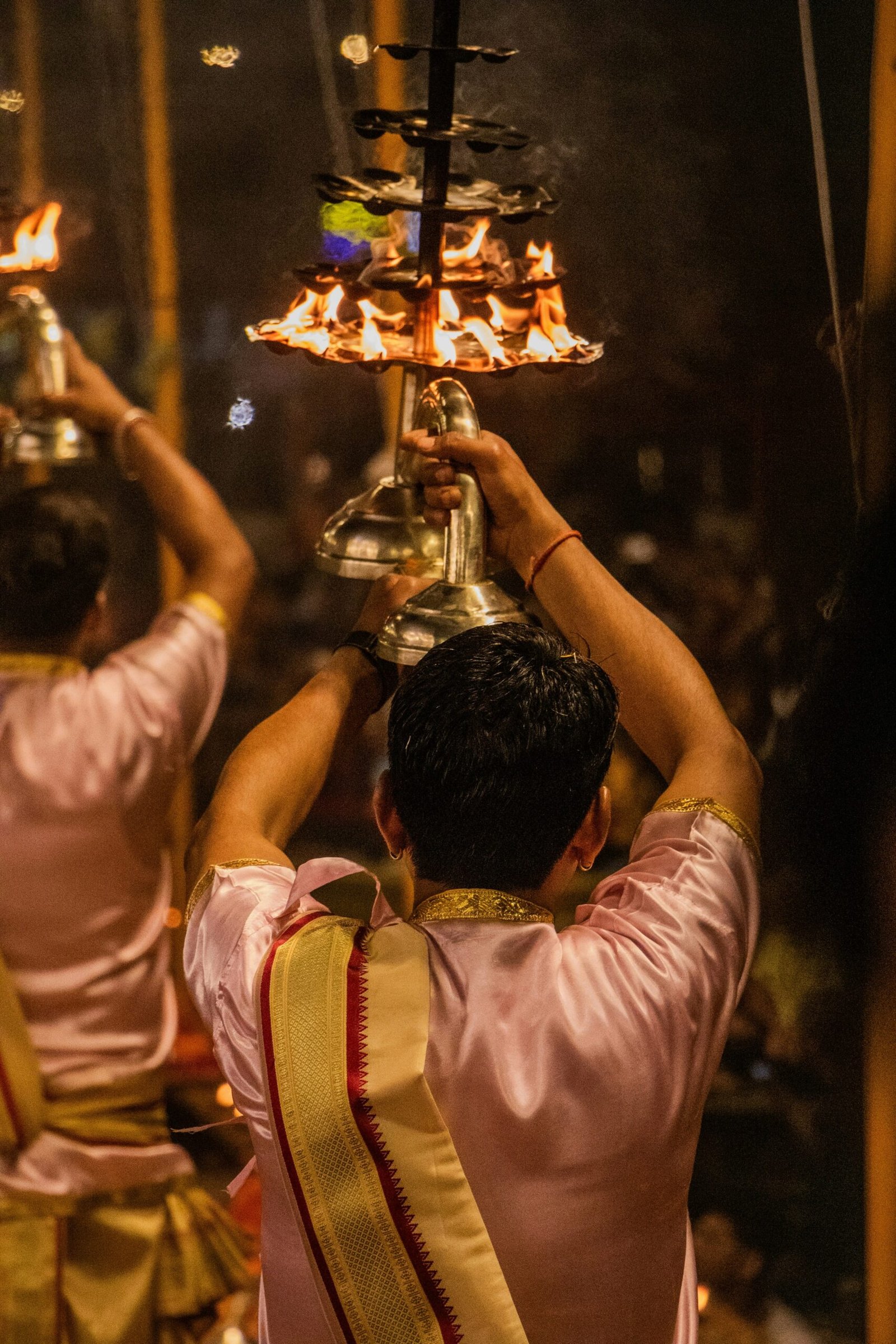
The first thing you notice at the Ganga Aarti in Varanasi is how quickly the riverfront changes once the ceremony begins. At Dashashwamedh Ghat, priests move through a coordinated ritual of lamps, incense, bells and chanting while people watch from the steps and boats gathered on the Ganga.
For a first visit, the practical questions matter too: What is the Ganga Aarti timing? Where should you watch it? Is a boat better than the ghat? There is also the quieter morning programme at Assi Ghat, known as Subah-e-Banaras.
Here’s what to know before you go, from timings and viewing options to the morning Aarti, Dev Deepawali and simple tips for navigating the crowds. If you want the ceremony arranged with temple sightseeing and transfers, compare our Varanasi packages with Ganga Aarti.
What Is the Ganga Aarti in Varanasi?
The evening Ganga Aarti in Varanasi is a prayer ceremony held on the riverfront, with Dashashwamedh Ghat being the city’s best-known setting for it. Priests perform the ritual with large lamps, incense, bells and chants, while devotees and visitors gather on the ghat steps or watch from boats on the Ganga.
The ceremony is performed as an offering to the river, and the combination of fire, sound and movement is what makes it different from simply watching a temple ritual. It is also included among Incredible India’s recommended Varanasi experiences. The scale matters: at Dashashwamedh, several priests perform together on raised platforms, creating a view that can be followed from both the river and the ghat.
For a first-time visitor, the main choice is simple: watch from the steps for a closer view, or take a boat for a wider perspective of the riverfront.
Ganga Aarti Timing: When Does It Start?
There isn’t one fixed Ganga Aarti timing in Varanasi throughout the year. The evening ceremony shifts with the season, so check the current schedule before leaving for Dashashwamedh Ghat. Normally the timings are 6:15–6:45 PM in winter and 7:00–7:15 PM in summer — see our guide to the best time to visit Varanasi for a full seasonal breakdown.
The ceremony lasts roughly 45 minutes, but the viewing time starts much earlier. On weekends, Mondays and festival days, the ghat can fill quickly, so arriving 45–90 minutes early gives you more choice about where to sit.
Planning to watch from a boat? Confirm the boarding time and location beforehand so the boat is on the river before the ceremony begins.
Is There a Morning Ganga Aarti at Assi Ghat?
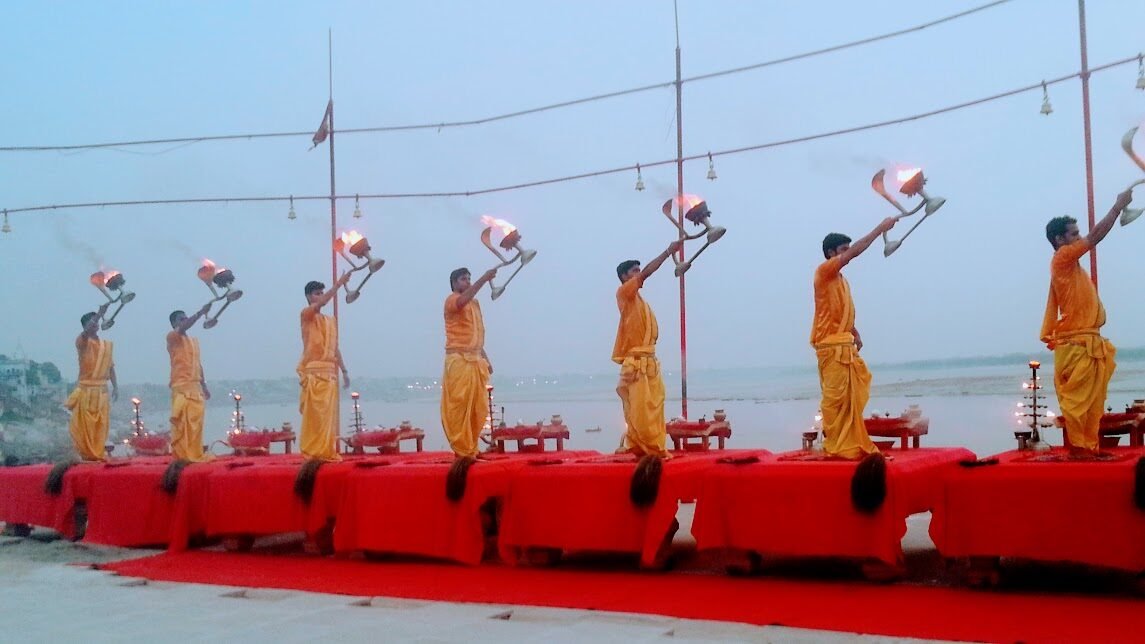
Yes. Assi Ghat has a morning devotional programme known as Subah-e-Banaras, offering a quieter alternative to the busy evening Aarti at Dashashwamedh Ghat.
The morning programme combines Vedic chanting, devotional music, yoga and other spiritual activities, with the riverfront taking on a much calmer pace than it does later in the day. It is a good option if you want to experience the religious side of Varanasi without the large evening crowds.
The contrast is noticeable. Dashashwamedh is about the scale and energy of the evening ceremony; Assi in the morning feels more open and unhurried. You can attend the programme, spend some time by the river and continue into a sunrise boat ride or an early walk through the nearby lanes.
If the evening crowds aren’t your preference, Assi Ghat in the morning is worth adding to your itinerary. Many visitors pair the evening Aarti with a day of temple-hopping — see our guide to the famous temples in Varanasi, including Kashi Vishwanath Temple, which sits a short walk from Dashashwamedh Ghat.
Ganga Aarti by Boat or From the Ghat: Which Is Better?
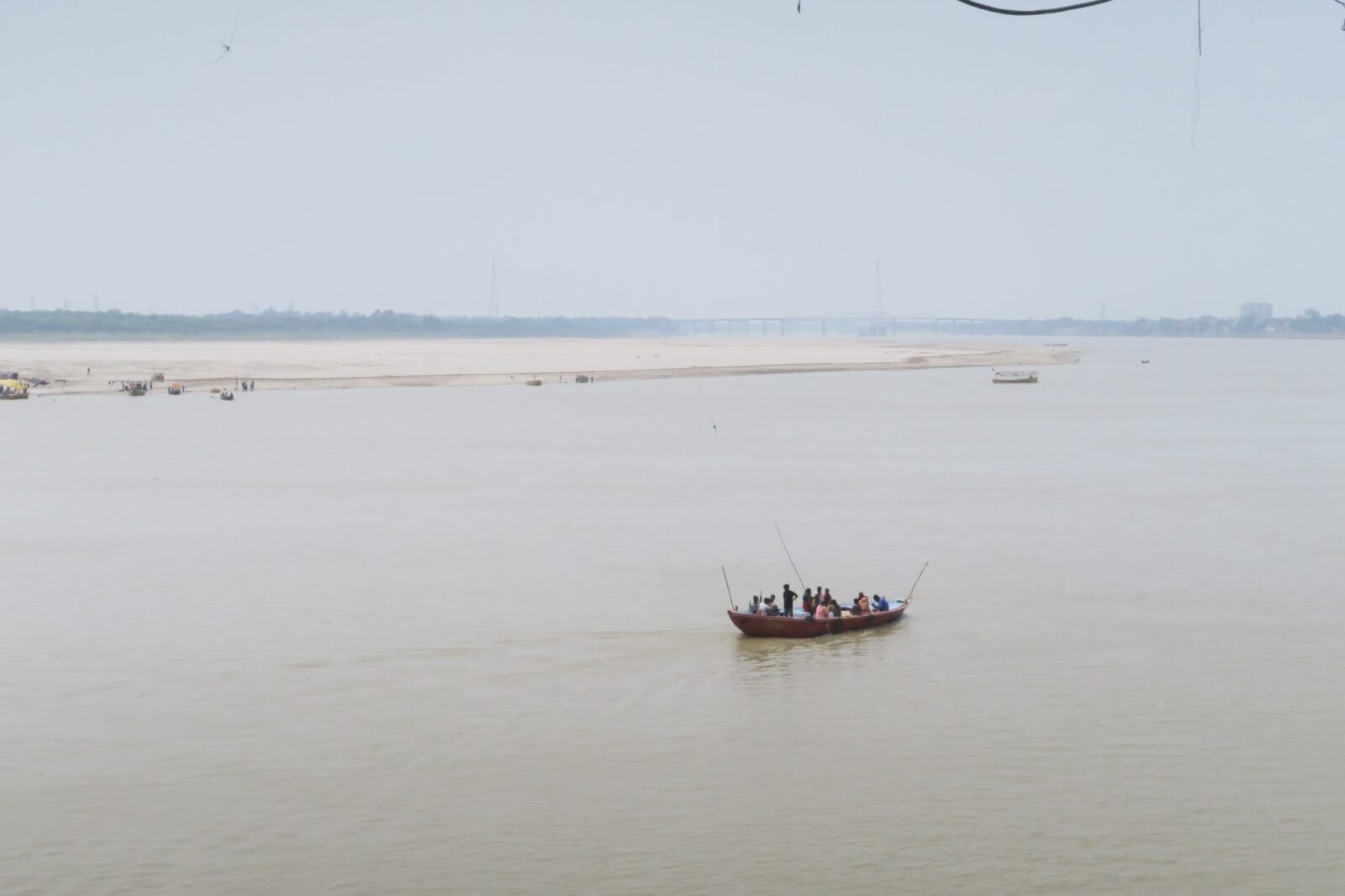
The choice comes down to the kind of view you want. From the ghat, you are closer to the priests and can follow the ritual from the steps as the lamps, bells and chanting unfold in front of you. The atmosphere is more immediate, but the popular viewing areas can become crowded.
A boat ride gives you more distance and a wider view of the riverfront. From the water, you can see the raised platforms, the priests performing the Aarti and the illuminated ghats together. It also lets you experience the ceremony from the river rather than from the crowded ghat steps.
Choose the ghat if being close to the ritual matters most. Choose a boat if you want a broader view of the ceremony and riverfront. If you opt for a boat, confirm the boarding details beforehand.
What Happens During Dev Deepawali?
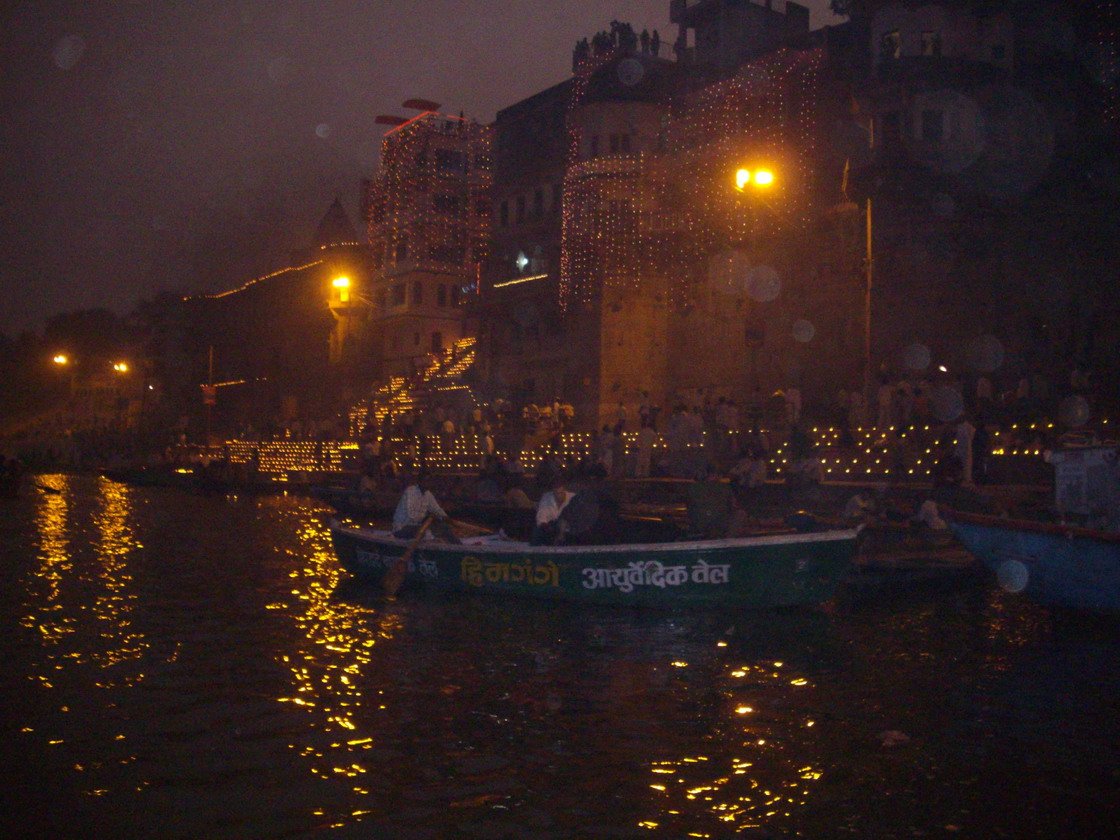
Dev Deepawali takes place on Kartik Purnima and changes the scale of the riverfront celebrations in Varanasi. The ghats are illuminated with large numbers of diyas, bringing far more activity to the Ganga than on a regular evening.
Crowds can be much larger than on an ordinary evening, particularly around the main ghats, so this is not the time to arrive casually and expect to find a good viewing spot. A boat can be a practical way to see the illuminated riverfront, although arrangements should be made well in advance.
If you are visiting specifically for Dev Deepawali, check the festival date for that year before booking your trip and allow extra time for movement around the ghats. For temples, ghats and a complete Varanasi itinerary built around your dates, see our Varanasi travel guide.
Practical Tips for Attending Ganga Aarti
A little preparation makes the Ganga Aarti in Varanasi easier to enjoy, particularly when the ghats are busy.
Arrive early: Popular viewing areas can fill well before the ceremony begins, especially on weekends and festival days.
Wear comfortable footwear: You may need to walk through crowded lanes and spend time standing or sitting on the ghat steps.
Keep belongings secure: Crowded areas around the ghats require the usual care with phones, wallets and bags.
If taking a boat: Confirm the boarding point and timing beforehand so you reach the river in time for the ceremony.
Check the day’s timing: Aarti timings vary by season, so confirm the current schedule before setting out.
Be respectful: Keep a reasonable distance during rituals and follow local expectations around photography.
Want to see it for yourself? Get in touch with Trip Holidays Planner to plan your visit, or explore our Varanasi spiritual tour packages for a guided experience of the Ganga Aarti, temples and ghats.
FAQs
What time does Ganga Aarti start in Varanasi?
The timing changes with the season. It is generally around 6:15–6:45 PM in winter and 7:00–7:15 PM in summer, but check the current schedule before visiting Dashashwamedh Ghat.
Where is the main Ganga Aarti held in Varanasi?
The best-known evening ceremony takes place at Dashashwamedh Ghat, where priests perform the ritual on raised platforms beside the Ganga.
Can I watch Ganga Aarti from a boat?
Yes. A boat gives you a view of the ceremony from the river and lets you see the illuminated ghats and ritual platforms together. Confirm your boarding details beforehand.
How early should I reach Dashashwamedh Ghat?
Arriving 45–90 minutes early is advisable, particularly on weekends, Mondays and festival days when popular viewing areas can fill quickly.
Is there a morning Ganga Aarti in Varanasi?
Yes. Assi Ghat hosts the morning Subah-e-Banaras programme, which includes devotional activities and offers a quieter alternative to the evening ceremony at Dashashwamedh Ghat.
For a complete short-trip plan that combines the Aarti with temple visits and a sunrise boat ride, follow our 2-day Varanasi itinerary.
Planning your visit around the Aarti? Explore Varanasi packages with Ganga Aarti and Kashi sightseeing to combine the ceremony with temples, ghats and a sunrise boat ride.